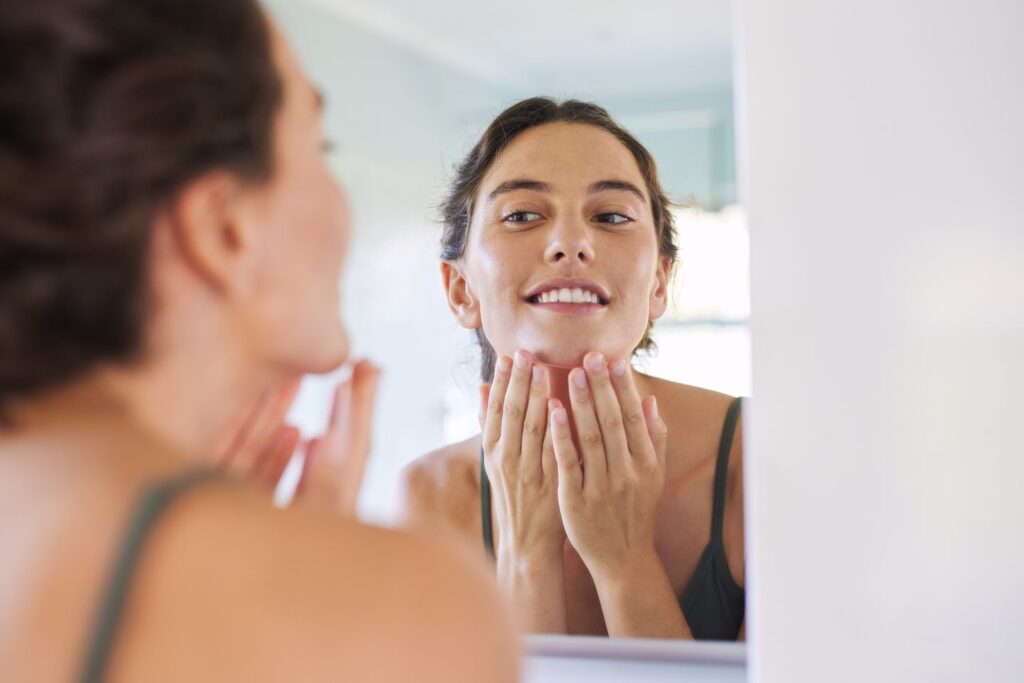
After a chemical peel, it’s completely normal to question what you’re seeing in the mirror – especially when redness and peeling start to appear. It can feel unsettling to watch your skin change when you’re not sure what’s ahead. This complete chemical peel aftercare guide walks you through every stage of recovery so you can protect your results and feel confident throughout the process.
At Luxe Medical Spa in Costa Mesa, CA, our certified professionals guide every patient through their chemical peel journey from treatment day through full healing. Understanding what your skin needs during recovery is just as important as the peel itself.
If you’d like more personalized guidance based on your skin type or peel, contact our team today.
What Happens to Your Skin After a Chemical Peel?
A chemical peel works by applying a carefully selected acid solution to the skin’s surface. This controlled exfoliation removes damaged outer layers and stimulates collagen production beneath. The result over time is a smoother texture, a more even tone, and a clearer complexion.
The recovery experience varies depending on the depth of your peel. Superficial peels involve minimal downtime, while medium-depth peels may require several days of visible peeling and redness. Your provider at Luxe Medical Spa will have discussed what to expect based on your specific treatment.
The First 24 to 48 Hours: What to Expect
The first two days are the most sensitive period of your recovery. Knowing what is normal helps you stay calm and care for your skin correctly.
What you may experience:
- Redness, warmth, and tightness across treated areas
- Mild swelling, especially around the eyes and cheeks
- Skin that feels dry or begins to look darker before peeling starts
What to do:
- Keep skin clean and moisturized. Use only the gentle cleanser and moisturizer recommended by your provider.
- Apply SPF 30 or higher if you need to go outside, even briefly.
- Stay hydrated. Drinking plenty of water supports your skin’s healing from the inside.
- Sleep with your head slightly elevated to reduce swelling.
What to avoid:
- Do not pick, peel, or rub the skin. This is the single most important rule.
- Avoid makeup for at least 24 to 48 hours, or until your provider clears you.
- Skip hot showers, saunas, and steam rooms entirely during this window.
Redness and tightness during this phase are completely expected. The discomfort is typically mild and manageable.
Week-by-Week Chemical Peel Recovery Timeline
Week 1: Peeling and Renewal Begin
Days 3 through 5 are typically when visible peeling begins. Your skin may look flaky, uneven, or patchy. This is the exfoliation process working exactly as intended.
Most patients find that the skin feels dry and tight during this period. Continue using your prescribed gentle moisturizer generously. Avoid any active ingredients like retinol, vitamin C serums, or exfoliating acids until your provider clears you. Sun protection is non-negotiable during week 1.
Week 2: Skin Begins to Settle
By the start of week 2, most of the visible peeling from superficial peels will be resolved. Medium-depth peel patients may still see some lingering flakiness. The redness typically fades to a pink or peachy tone.
You may begin to notice your skin looking brighter and more even. Most patients feel comfortable returning to their normal daily routine, including light makeup. Continue to avoid intense workouts, direct sun exposure, and any harsh skincare products.
Weeks 3 to 4: Results Become Visible
This is when the real reward begins to show. Skin texture typically feels noticeably smoother, and skin tone looks more refined. Improvement in hyperpigmentation or fine lines often becomes visible during this window.
Most normal activities and skincare routines can resume by week 3. Your provider may begin reintroducing active ingredients at this stage, depending on how your skin has responded.
Month 2 and Beyond
Full collagen remodeling continues for several weeks after the visible recovery is complete. Many patients see continued improvement in skin quality over the following 1 to 2 months. Maintaining a consistent SPF routine and a gentle skincare regimen protects and extends your results.
Chemical Peel Aftercare: Do’s and Don’ts
Do:
- Use only provider-recommended cleansers and moisturizers during recovery
- Apply broad-spectrum SPF 30 or higher every single morning
- Keep your hands away from your face
- Stay well hydrated throughout recovery
- Follow up with your Luxe Medical Spa provider as scheduled
- Wear a wide-brimmed hat when spending time outdoors
Don’t:
- Pick, peel, or scratch at flaking skin
- Use retinols, AHAs, BHAs, or vitamin C without clearance from your provider
- Expose treated skin to direct sun without protection
- Use tanning beds or spray tans during recovery
- Engage in intense cardio or activities that cause heavy sweating for at least one week
- Apply fragranced products or alcohol-based toners to healing skin
Warning Signs: When Should You Call Your Provider?
Complications from chemical peels are uncommon, but it is important to know what to watch for. Contact Luxe Medical Spa right away if you notice any of the following:
- Blistering or open sores that were not discussed as expected outcomes for your peel depth
- Significant swelling that worsens after the first 48 hours rather than improving
- Signs of infection, including yellow or green discharge, increasing warmth, or fever
- Severe burning or pain that does not respond to gentle skincare and over-the-counter pain relief
- Unusual darkening of the skin that appears suddenly and spreads
Most of these situations are rare and very manageable when caught early. Do not hesitate to reach out to our team if something feels off.
Recovery Tips That Help You Get Better Results
Going beyond the basics can meaningfully improve your outcome. Here are practical tips our Costa Mesa patients have found helpful:
Prioritize sleep. Your skin repairs itself most efficiently overnight. Aim for seven to eight hours during the recovery period.
Support healing from within. Foods rich in antioxidants, vitamin C, and zinc support collagen production and skin repair. Limit alcohol, which can dehydrate skin and slow healing.
Pair your peel with complementary treatments. Once fully healed, treatments like microneedling or a HydraFacial can extend and enhance your results. Your provider can recommend a personalized treatment sequence.
Commit to SPF long term. Sun protection is not just a recovery rule – it is the single most effective thing you can do to preserve your results and prevent future damage.
Frequently Asked Questions About Chemical Peel Aftercare
How long does chemical peel recovery take?
Most superficial peel recovery is complete within 5 to 7 days. Medium-depth peels typically require 7 to 14 days of visible healing, with full skin settling continuing for several weeks after that.
When can I return to work after a chemical peel?
Many patients return to work within 2 to 3 days after a superficial peel, especially if they are comfortable with some visible redness. Medium-depth peel patients often take 5 to 7 days before feeling confident in a work setting.
When can I exercise after a chemical peel?
Most providers recommend avoiding intense exercise for at least 5 to 7 days. Heavy sweating can irritate healing skin and increase the risk of infection. Light walking is generally fine after the first 48 hours.
Is it normal to have significant peeling after a chemical peel?
Yes, visible peeling is a completely normal and expected part of the process. The amount of peeling depends on the depth of your peel. Peeling typically begins around day 3 and resolves by the end of the first week for most superficial treatments.
What can I do to speed up chemical peel recovery?
Keep skin consistently moisturized, stay hydrated, avoid sun exposure, and resist the urge to pick at peeling skin. Letting the skin shed naturally is the most effective thing you can do to support a smooth recovery.
When will I see results after a chemical peel?
Most patients notice initial improvement in skin brightness and texture within 1 to 2 weeks. Continued improvement in tone, texture, and collagen quality typically develops over the following 4 to 8 weeks.
Ready to Experience a Chemical Peel at Luxe Medical Spa?
Recovery is straightforward when you know what to expect and have an experienced team behind you. At Luxe Medical Spa in Costa Mesa, CA, our certified professionals customize every chemical peel treatment to your skin’s unique needs and walk you through every step of aftercare.
Whether you’re a current patient with recovery questions or still exploring your options, we’re here to help. Schedule your consultation today and take the first step toward clearer, more radiant skin.